
TLDR
Digital art sales work best when you treat the artwork like a product, not just a file.
Start by choosing what you want to sell: digital downloads, printable wall art, print-on-demand products, original digital commissions, NFTs or physical merch made from your art.
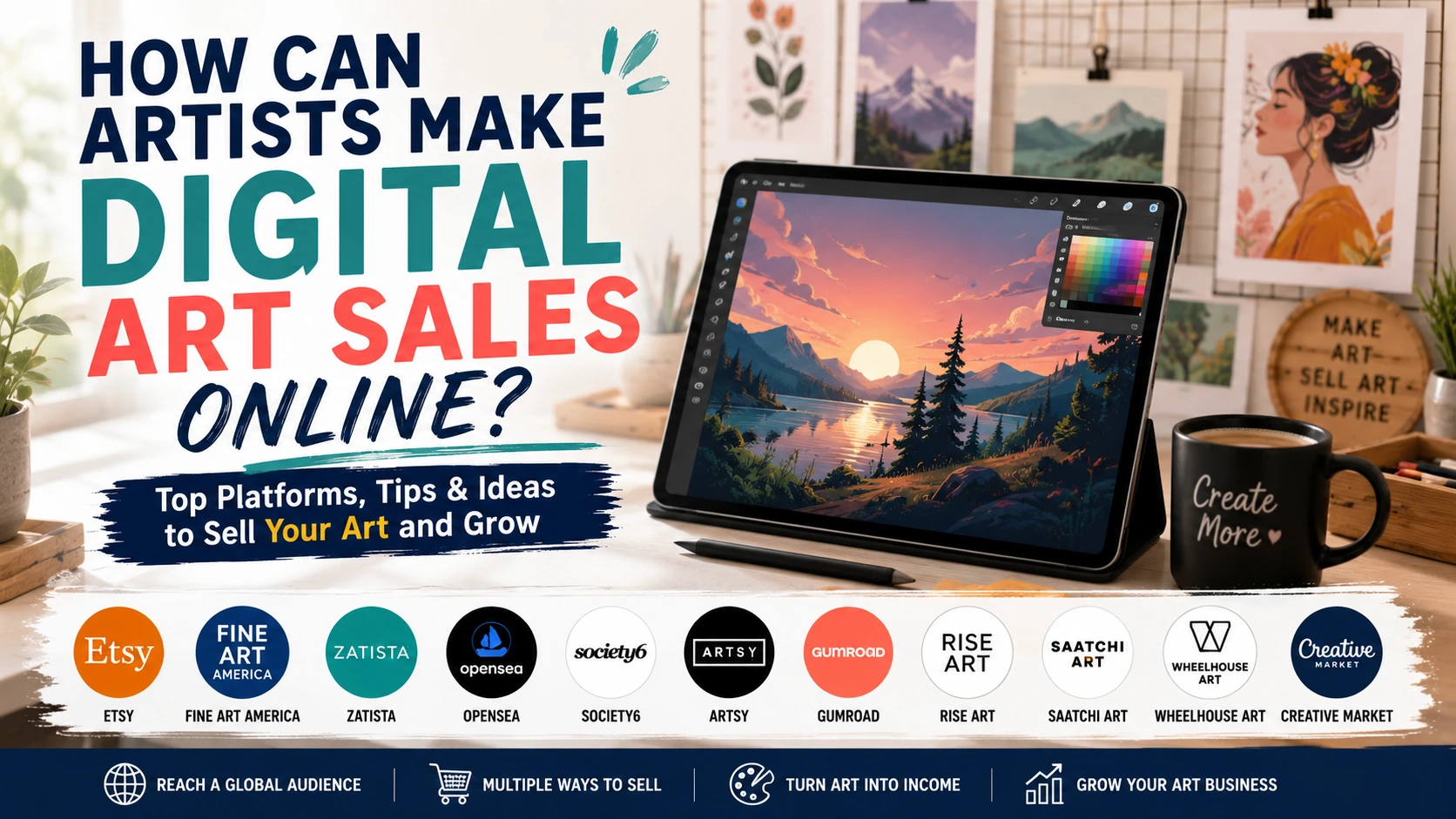
Platforms like Etsy, Gumroad, Creative Market, Fine Art America, Society6, Saatchi Art, Rise Art, Zatista, Artsy and OpenSea can all work, but they serve different buyers. You can also turn digital artwork into physical products like custom stickers through YouStickers.com.
The nice thing about digital art sales is that one good piece of artwork can become several different products. A single illustration might become a printable art file, a wall print, a sticker, a phone case, a digital brush pack or a limited-edition collectible. The hard part is choosing the right format before you start listing everywhere.
That is where many artists lose time. They make the art, upload it to five platforms and hope the sales arrive. Sometimes that works. Usually, it is better to decide who the art is for, how the buyer will use it and which sales channel matches that buyer.
Where Digital Art Sales Actually Happen
Digital art sales do not happen in one place. They happen across several different types of platforms, each with a different kind of customer.
Etsy is strong for digital downloads, printable wall art, clipart, party printables, planner stickers, social templates and art files that solve a specific customer need. Buyers often search with a project already in mind. That makes Etsy useful for practical digital products, not just portfolio-style art.
Gumroad is better for selling directly to your audience. It works well when you already have followers on Instagram, TikTok, YouTube, Pinterest, a newsletter or a personal website. Gumroad is not usually where random buyers browse for wall art. It is where an artist can send people to buy a print file, tutorial pack, brush set, digital zine or premium download.
Creative Market is a better fit for design assets. Think fonts, templates, Procreate brushes, textures, mockups, illustrations, icons and graphics that other creators can use in their own projects. It is less about “buy this art because it looks nice” and more about “buy this asset because it helps you make something.”
Fine Art America and Society6 are print-on-demand platforms. They can turn your artwork into physical products like prints, home decor, apparel and accessories. That removes a lot of production work. The tradeoff is that you are selling inside someone else’s marketplace, with less control over the full customer experience.
Saatchi Art, Rise Art and Zatista fit a more fine-art direction. These platforms are better for original work, higher-priced pieces, curated collections and collectors who expect an artist profile rather than a quick download.
Artsy is more gallery-focused. It is usually not the first place an individual digital artist opens a shop. It makes more sense when you have gallery representation or a formal art-market path.
OpenSea and WheelHouse Art sit closer to the NFT side of digital art sales. That market is separate from printable downloads or print-on-demand products. NFTs can make sense for artists with a collector community that understands crypto wallets, digital ownership and blockchain platforms. They are not the easiest starting point for most beginners.
Choose The Product Before The Platform
A common mistake is asking, “Where should I sell my digital art?” before asking, “What am I selling?”
Those are different questions.
Here are the main digital art product types:
| Product Type | Best Fit | Good Platform Examples |
|---|---|---|
| Printable wall art | Home decor buyers | Etsy, Gumroad, personal site |
| Digital downloads | DIY customers, planners, crafters | Etsy, Gumroad |
| Design assets | Designers, creators, small businesses | Creative Market, Gumroad |
| Print-on-demand products | Buyers who want physical goods | Fine Art America, Society6 |
| Fine art originals or limited editions | Collectors | Saatchi Art, Rise Art, Zatista |
| NFT art | Digital collectors | OpenSea, WheelHouse Art |
| Physical stickers or merch | Fans, events, markets, online shops | YouStickers.com, your own store |
This decision matters because the same artwork may need different packaging.
A printable wall art file should include clear size ratios, easy download instructions and maybe several file sizes.
A design asset needs licensing details, clean file organization and examples of how the asset can be used.
A sticker design needs clean edges, readable details, strong contrast and a shape that works when printed small.
A fine art listing needs an artist statement, medium details, dimensions, edition information and a more polished presentation.
The art may start in the same place. The product does not.
Turn Digital Artwork Into Physical Products
Digital files are easy to sell repeatedly, but physical products can make the artwork feel more real to buyers. This is especially true for artists with bold illustrations, cute characters, fan-style designs, funny quotes, logos, mascots, pattern art or small collectible pieces.
Stickers are one of the easiest physical products to test because they do not require customers to commit to a large purchase. A $3 to $5 sticker is easier to buy than a $40 print. And if someone likes the art, that small purchase can lead to larger orders later.
You can use YouStickers.com to turn digital artwork into custom stickers in different sizes and shapes. This works well for artist alleys, Etsy orders, convention tables, thank-you inserts, small merch bundles and online shop add-ons.
This is also a good way to get more value out of older art. A design that did not sell well as a print may work better as a sticker. A character that feels too small for wall art might be perfect for a laptop, water bottle or notebook. Not every piece needs to become a museum print. Some art just wants to live on a thermos.
The key is to prepare the file correctly. For stickers, use high-resolution artwork, clean edges and strong contrast. Avoid tiny details that disappear at small sizes. If the design has a white background you do not want printed, remove it before ordering.
Physical products also help with marketing. A customer wearing, sharing or photographing your sticker is promoting your art in a way a private download never will.
Build Listings That Make The Buyer Confident
A good listing does not just show the art. It answers the buyer’s questions before they have to ask.
For digital downloads, include:
- what file types are included
- what sizes or ratios are included
- whether the file is for personal or commercial use
- how the buyer receives the file
- what the buyer can and cannot do with it
- whether refunds are available for digital products
- how to print the file for best results
For print-on-demand products, include:
- product size
- material or print type
- finish
- shipping expectations
- care instructions, when relevant
- mockups that show scale clearly
For physical stickers, include:
- size
- material
- finish
- whether the sticker is waterproof or laminated
- where the sticker works best
- how it ships
Good product photography and mockups matter. But do not make the mockup more attractive than the real product. Buyers should understand what they are getting. A printable file should not look like it comes framed unless the listing clearly explains that the frame is not included.
The product title should also match how people search. “Moonlight Cat Digital Illustration No. 4” might sound artistic, but “Black Cat Printable Wall Art” is much easier for a buyer to find.
You can still have personality in the description. Just make the practical details easy to find.
Price Digital Art With A Simple System
Digital art pricing is hard because the same file can be sold again and again. That does not mean it should be cheap. It means the price needs to match the product type, use case and buyer expectation.
A printable wall art file might sell for a lower price because the buyer still has to print and frame it.
A commercial-use design asset should cost more than a personal-use download because the buyer may use it to make money.
A limited-edition digital piece can be priced higher if it comes with scarcity, artist reputation or collector interest.
A custom commission should account for time, revisions, complexity and usage rights.
A physical sticker needs to include production cost, packaging cost, platform fees and profit. This is where artists sometimes underprice. They forget the envelope, backing card, label, shipping supplies and time spent packing orders. Tiny costs add up. Annoyingly well.
A simple pricing framework looks like this:
Base cost + platform fees + packaging or delivery cost + artist profit = minimum selling price.
Then compare that number to the market. If the market price is much lower, you may need a cheaper production method or a different product. If the market price is higher, you may have room to improve your margin.
Do not copy another artist’s price blindly. Their audience, costs, file quality, production setup and platform fees may be very different from yours.
Protect Your Rights And Read Platform Rules
Digital art sales come with one big responsibility: make sure you have the right to sell what you list.
Do not use characters, logos, fonts, patterns, textures or images unless you have the rights or a proper license. “I found it online” is not a license. “Everyone else is doing it” is not a license either.
This matters even more with digital products because buyers may reuse the files. If you sell a template, brush pack, clipart collection or commercial-use asset, the licensing language needs to be clear.
AI-generated art also needs extra care. Platform policies vary. Some platforms allow AI-assisted work with disclosure or specific rules. Others restrict art that is primarily generated by AI without meaningful human creative input. The safest move is to check the current policy for each platform before listing.
You should also decide what kind of license you are selling:
Personal use means the buyer can use the file for themselves.
Commercial use means the buyer can use the file in business projects, usually with limits.
Exclusive rights mean the buyer is the only one who can use the artwork in the agreed way.
Most small digital art sales are personal-use or limited commercial-use products. Full exclusive rights should cost much more because you are giving up future use.
The Best Starter Plan For Digital Art Sales
Start with one sales path, then expand.
For most artists, I would not start with every platform at once. That creates too much setup work and not enough learning.
A simple beginner path looks like this:
First, choose 5 to 10 pieces of artwork that fit together visually.
Second, turn those pieces into one product type. Printable wall art, sticker designs, digital downloads or design assets are all reasonable choices.
Third, pick one main platform. Etsy is good for search-based buyers. Gumroad is good for audience-based selling. Creative Market is good for design assets. Fine Art America or Society6 are good if you want print-on-demand.
Fourth, make one physical version of the strongest art. Stickers are a practical place to start because they are easy to sell, ship and bundle.
Fifth, track what people actually respond to. Save the art that gets clicks, favorites, shares, cart adds or in-person comments. Those are signals.
After that, expand the winners. If a print design sells well, make it a sticker. If a sticker sells well, make a matching mini print. If a digital asset sells well, make a bundle.
Digital art sales improve when you stop guessing and start treating each product like a test.
Common Mistakes That Hurt Digital Art Sales
The first mistake is selling too many unrelated styles at once. A shop with watercolor florals, cyberpunk robots, wedding templates and pet portraits can feel scattered. You can grow into multiple collections later. Start with a clear look.
The second mistake is using weak previews. Buyers need to see the product in context. Show wall art in a room, sticker art on a laptop or water bottle and digital assets inside a sample design.
The third mistake is skipping keywords. Search-based platforms need clear titles, tags and descriptions. Use words buyers would actually type.
The fourth mistake is ignoring file quality. A blurry file, messy cut edge or wrong color setup can ruin a sale and create support issues.
The fifth mistake is underexplaining usage rights. Buyers need to know if they can print the art, sell products with it or use it in business branding.
The sixth mistake is relying only on marketplaces. Marketplaces can bring traffic, but they also control search visibility, rules, fees and competition. Build your own audience over time through email, social content or a personal site.
Conclusion
Digital art sales are not just about uploading artwork and waiting. The better approach is to choose a product, match it to the right platform and make the listing easy to understand.
Etsy can work for searchable downloads. Gumroad can work for direct sales. Creative Market can work for design assets. Fine Art America and Society6 can work for print-on-demand products. Saatchi Art, Rise Art and Zatista can work for more collector-focused art. OpenSea and WheelHouse Art can work for NFT-focused buyers. And YouStickers.com can help turn digital artwork into physical stickers that are easy to sell, bundle and promote.
The best starting point is simple: pick one audience, one product type and one platform. Make it clear. Price it honestly. Then use what sells to decide what to make next.
FAQs
What Is The Best Place To Sell Digital Art?
The best place depends on the product. Etsy is strong for digital downloads and printable art. Gumroad is good for selling directly to an existing audience. Creative Market is better for design assets. Fine Art America and Society6 are useful for print-on-demand products.
Can I Sell The Same Digital Art On Multiple Platforms?
Usually yes, as long as you are not selling exclusive rights or violating a platform agreement. Keep your pricing, licensing and product descriptions consistent so buyers understand what they are purchasing.
Are Stickers A Good Product For Digital Artists?
Yes, stickers are a strong product for digital artists because they are small, collectible and easy to bundle with prints or ship on their own. They work especially well for character art, bold illustrations, cute designs, slogans and logo-style artwork.
Should I Sell Digital Downloads Or Physical Products First?
Digital downloads are easier to deliver because there is no inventory or shipping. Physical products can feel more valuable to customers and may be easier to market visually. A good starting plan is to test digital downloads first, then turn the strongest designs into stickers or prints.
Can I Sell AI-Generated Digital Art?
Some platforms allow AI-generated or AI-assisted art, but the rules vary. Check each platform’s current policy before listing. You should also be clear about your creative process and make sure you have the rights needed to sell the work.
How Much Should I Charge For Digital Art?
Price depends on the product type, usage rights, platform fees, audience and quality of the artwork. Personal-use downloads usually cost less than commercial-use assets, limited editions or custom commissions.