
TLDR
- Clear stickers are printed on transparent vinyl, so the surface behind the sticker shows through.
- White vinyl stickers are printed on an opaque white base, so colors usually look brighter and more consistent.
- Clear stickers are best for glass, windows, bottles, jars, and clean product packaging.
- White vinyl stickers are the safer all-around choice for laptops, water bottles, giveaways, packaging, and bold logo stickers.
- The best choice depends on your artwork, surface color, and how much contrast your design needs.
A sticker can look great on screen and still feel different once it lands on the actual surface. That usually comes down to one quiet detail: the base material.
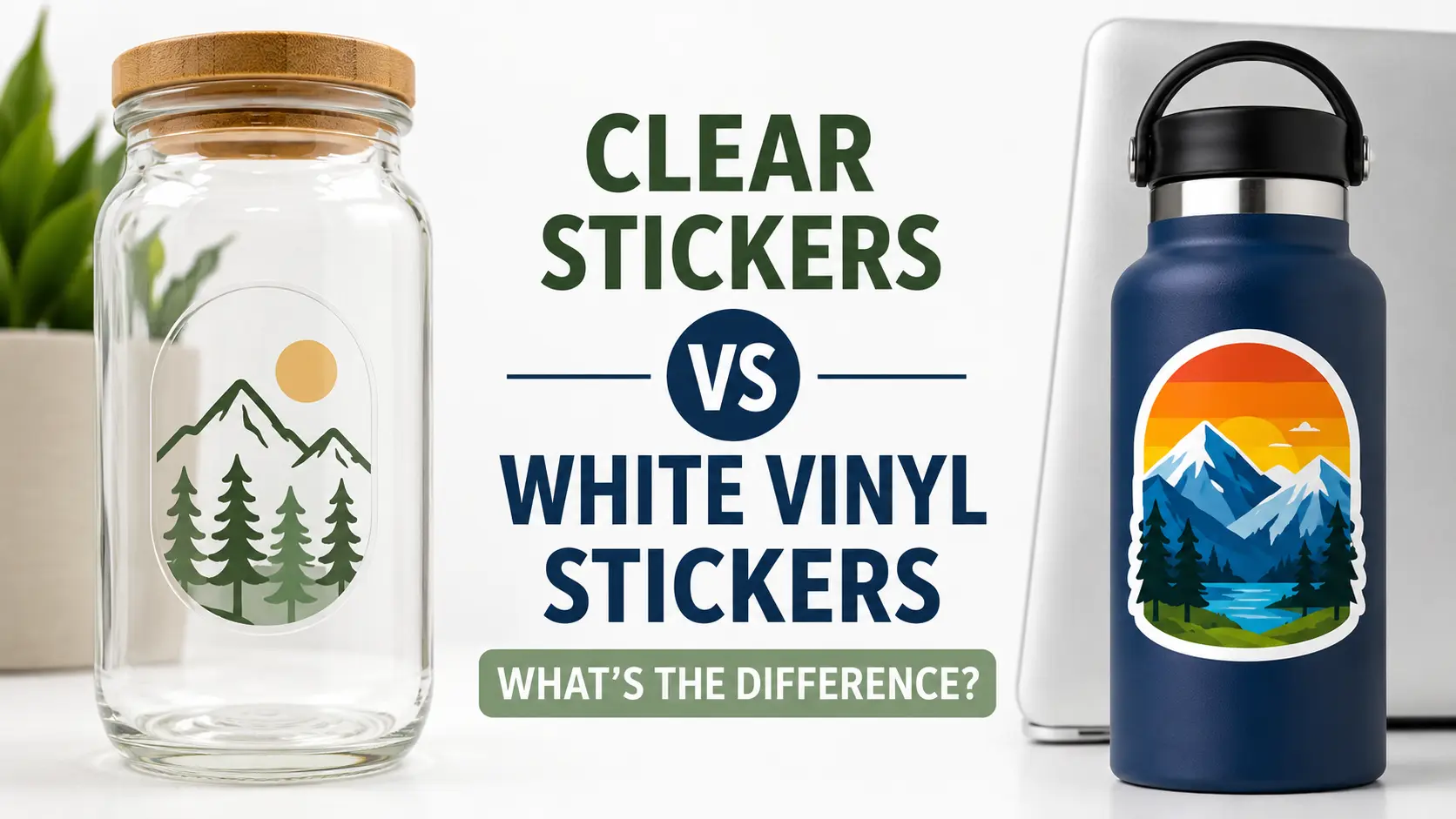
Clear stickers vs white vinyl stickers is really a question about background. Clear stickers let the surface show through. White vinyl stickers give your artwork a solid white foundation. Both can be durable, waterproof, and great for branding, but they do not behave the same visually.
The main difference is simple. Clear stickers are printed on transparent vinyl, while white vinyl stickers are printed on opaque white vinyl. That affects color, contrast, readability, and the final look of your design.
Clear Stickers Vs White Vinyl Stickers: The Simple Difference
Clear stickers are made with clear vinyl. Any part of the sticker that is not printed will stay transparent. This creates a clean “no background” look, especially on glass, clear bottles, windows, jars, and polished packaging.
White vinyl stickers are made with white vinyl. The white material sits behind the printed design, so the sticker has a built-in background. That makes colors look stronger and helps text stay readable across more surfaces.
Think of white vinyl like printing on a white sheet of paper. Think of clear vinyl like printing on a window. The same artwork can feel very different depending on what sits behind it.
You can order both options from CustomStickers.com, including custom clear stickers and custom vinyl stickers.
What Are Clear Stickers?
Clear stickers are transparent vinyl stickers. They work well when you want the sticker to blend into the surface instead of sitting on top of it visually.
They are popular for:
- Glass jars
- Clear bottles
- Storefront windows
- Cosmetic packaging
- Candle jars
- Drinkware
- Minimal logo stickers
- Product labels where the container should show through
Clear stickers can make packaging feel cleaner because there is no white block around the artwork. On a clear jar, for example, the logo can look like it was printed directly onto the container. That is the appeal.
But clear stickers are also less forgiving. The surface color matters a lot. A black logo on a clear sticker can look sharp on a white jar, but disappear on a dark bottle. Light colors, thin lines, and small text can also lose contrast if the background is busy or dark.
Many clear stickers use a white ink layer under parts of the design to help colors look more opaque. That helps, but clear stickers still tend to look a little softer than white vinyl stickers because the material itself is transparent.
What Are White Vinyl Stickers?
White vinyl stickers are printed on a solid white vinyl base. This is the classic custom sticker style most people picture when they think of logo stickers, laptop stickers, water bottle stickers, or brand handouts.
White vinyl works well for:
- Logo stickers
- Laptop stickers
- Water bottle stickers
- Event giveaways
- Outdoor stickers
- Product packaging
- QR code stickers
- Car decals
- Bold illustrations
- Designs with small text
The white backing gives your artwork a reliable foundation. Colors look more predictable. White areas stay white. Small details are easier to read. And the sticker can work on light, dark, clear, matte, glossy, or colored surfaces.
That is why white vinyl is usually the safer choice when you are not sure where the sticker will be applied.
Quick Comparison Table
| Feature | Clear Stickers | White Vinyl Stickers |
|---|---|---|
| Base material | Transparent vinyl | Opaque white vinyl |
| Best visual effect | Clean, subtle, no-label look | Bold, bright, high-contrast look |
| Surface impact | Surface becomes part of the design | Surface matters less |
| Color brightness | Can look softer or lighter | Usually brighter and more consistent |
| White areas | May print as transparent unless white ink is requested | White areas naturally appear white |
| Best uses | Glass, windows, jars, bottles, minimal packaging | Logos, laptops, bottles, events, cars, general branding |
| Risk level | Higher if surface is dark or busy | Lower for most standard uses |
How Color Changes Between Clear And White Vinyl
Color is where the difference matters most.
On white vinyl, the white base helps printed colors stay bright. Red looks red. Blue looks blue. White text is visible because the sticker material itself is white.
On clear vinyl, the background becomes part of the final color. If the sticker goes on a clear bottle, the liquid, wall, label, or lighting behind the bottle can affect how the artwork reads. If the sticker goes on a dark surface, darker colors may blend in. If the design uses pale yellow, light gray, or thin white text, the artwork may not stand out enough.
This does not make clear stickers worse. It just means they need more planning.
A good rule: if your design needs strong color accuracy, high contrast, or small readable text, white vinyl is usually the better choice. If your design is simple, bold, and meant to feel integrated with the surface, clear vinyl can look excellent.
When Clear Stickers Are The Better Choice
Choose clear stickers when the background is part of the design.
Clear stickers are especially good for packaging where you want the product, bottle, or jar to show through. A clear sticker on a candle jar can let the wax color remain visible. A clear sticker on a drink bottle can avoid the heavy look of a large white label. A clear logo on a storefront window can feel clean without blocking too much glass.
Clear stickers also work well for minimal designs. A simple black logo, bold white ink design, or strong one-color graphic can look polished on glass or plastic.
Use clear stickers when:
- You want a subtle, printed-on look.
- The sticker will go on glass, plastic, or a clear container.
- Your artwork has strong contrast.
- You want transparent space around the design.
- You are comfortable letting the surface influence the final appearance.
The main mistake is using clear stickers for artwork that needs a lot of contrast but will be placed on a dark or uneven background. That is when a nice design can get lost.
When White Vinyl Stickers Are The Better Choice
Choose white vinyl stickers when you want the most reliable result.
White vinyl is the better pick for most general sticker orders because it gives your design its own background. It does not depend as much on the surface underneath. That makes it easier for brand stickers, event stickers, merch, packaging inserts, outdoor decals, laptop stickers, and water bottle stickers.
White vinyl is also better for detailed artwork. Illustrations, gradients, small type, QR codes, and colorful logos usually print cleaner on a white base.
Use white vinyl stickers when:
- You want bold color.
- Your design includes small text or fine detail.
- You do not know where people will place the sticker.
- You need the sticker to work on many surface colors.
- You want white areas to stay white.
- You are ordering stickers for giveaways, events, or customers.
For most brands, white vinyl is the practical default. Clear stickers are the more specific design choice.
What About White Ink On Clear Stickers?
White ink is one of the most important details with clear stickers.
On clear material, unprinted white areas do not automatically become white. They may be transparent unless white ink is added. That surprises people because most home and office printing assumes the paper is already white. Clear vinyl works differently.
White ink can be used in two main ways:
First, it can print actual white parts of the design. This matters for white logos, white text, white outlines, and other white artwork.
Second, it can be printed underneath colored areas to make those colors look more opaque. This is often called a white underlay. It helps prevent colors from looking too transparent or washed out.
Still, even with white ink, clear stickers may not look exactly like white vinyl stickers. The transparent material changes the way the final sticker feels. That softer look can be great, but it should be intentional.
Design Tips Before You Order
A few small design choices can prevent most problems.
For clear stickers, use strong contrast. Black, dark navy, deep green, and bold white ink tend to work better than pale colors. Avoid tiny light text unless you know the sticker will go on a dark enough surface to support it.
For white vinyl stickers, make sure the cutline and border make sense. A white border can help the sticker feel clean and intentional. Full-bleed artwork can also work well if the design is set up correctly.
For both materials, upload the highest-quality file you have. A vector file is ideal for logos. A high-resolution PNG or JPG can work well for photos and artwork. And when available, use a design proof. A proof is not just a formality. It is the moment where you can catch cutline issues, missing borders, size problems, or artwork concerns before printing.
Which Sticker Should You Choose?
Choose clear stickers if your design belongs on glass, bottles, windows, jars, or packaging where the surface should show through.
Choose white vinyl stickers if you want the most flexible, readable, and color-consistent option.
Here is the easiest way to decide:
If the sticker needs to stand out, choose white vinyl.
If the sticker needs to blend in, choose clear.
That one rule solves most orders. There are exceptions, of course. A bold clear sticker can stand out beautifully. A white vinyl sticker can still look clean and refined. But for first-time orders, the background question is the right place to start.
Common Mistakes To Avoid
The first mistake is putting a clear sticker on the wrong surface. Clear stickers can look great on glass and light backgrounds, but they may disappear on dark colors, busy textures, or reflective surfaces.
The second mistake is assuming white will print automatically on clear vinyl. White areas may need white ink. If white is important to your design, make that clear before production.
The third mistake is using clear stickers for tiny text. Small type needs contrast. If the background changes, the text may become hard to read.
The fourth mistake is choosing based only on the digital proof. A proof helps show size, cutline, and artwork placement, but it cannot fully recreate every real-world surface. A sticker on a black tumbler will not look the same as a sticker on a clear jar.
The safest move is to match the material to the final surface. That is not glamorous advice, but it saves a lot of frustration.
FAQs
Are Clear Stickers Waterproof?
Yes, clear vinyl stickers can be waterproof when they are printed on durable vinyl and protected with laminate. They are commonly used on bottles, windows, jars, and other smooth surfaces.
Are White Vinyl Stickers Better Than Clear Stickers?
White vinyl stickers are better for bright colors, readability, and general use. Clear stickers are better when you want the background surface to show through. Neither is always better. They solve different design problems.
Do Clear Stickers Show Up On Dark Surfaces?
They can, but the design needs strong contrast and may need white ink. Without enough opacity, clear stickers can look faded or hard to read on dark surfaces.
Can Clear Stickers Have White Ink?
Yes. Clear stickers can use white ink for white artwork or as an underlayer beneath colors. This helps the design look more opaque and easier to see.
Should I Use Clear Stickers Or White Vinyl Stickers For Product Packaging?
Use clear stickers for glass jars, clear bottles, and packaging where you want a no-label look. Use white vinyl stickers when readability, bold color, or consistent branding matters more.
Which Sticker Is Best For A Logo?
White vinyl is usually best for most logo stickers because it keeps the logo bright and readable. Clear stickers work well for simple logos on glass, windows, or clean packaging.